By Teresa Caruso · Updated October 26, 2026
A masticating juicer crushes and presses produce with a slow-turning auger instead of shredding it with a fast blade, so you get more juice from leafy greens and less foam in the glass. The catch: prices run from about $150 to $400+, and the models differ a lot in chute size, cleanup and how they handle fibrous veggies.
We narrowed the field to five slow juicers from Omega, Tribest, Kuvings and Nutribullet, each the best fit for a different kind of juicer owner.
How We Researched
We reviewed manufacturer specs (motor watts, RPM, auger design, included parts), Amazon listings and thousands of verified owner reviews, and cross-checked expert roundups from major food publications. We did not hands-on test these units; every spec below comes from the brand or its official Amazon listing.
| Model | Speed | Motor | Auger / Gears | Standout Feature |
|---|---|---|---|---|
| Omega Vertical 43 RPM | 43 RPM | 150W | Dual-edge auger | No-drip tap, auto screen cleaning |
| nutribullet Slow Juicer | 65 RPM | High-torque | Steel-tipped auger | 3″ chute, dishwasher-safe parts |
| Tribest Greenstar GS-1000 | 110 RPM | — | Twin gears, 24 steel masticators | Anti-jam pressure adjuster |
| Kuvings B6000W | 60 RPM | 240W brushless | Vertical auger | Wide chute, sorbet maker |
| Omega H3000R | 90–110 RPM | 150W | Slow auger | Compact, handles wheatgrass |
The 5 Best Masticating Juicers, Reviewed
1. Omega Vertical 43 RPM Slow Juicer — Best Overall
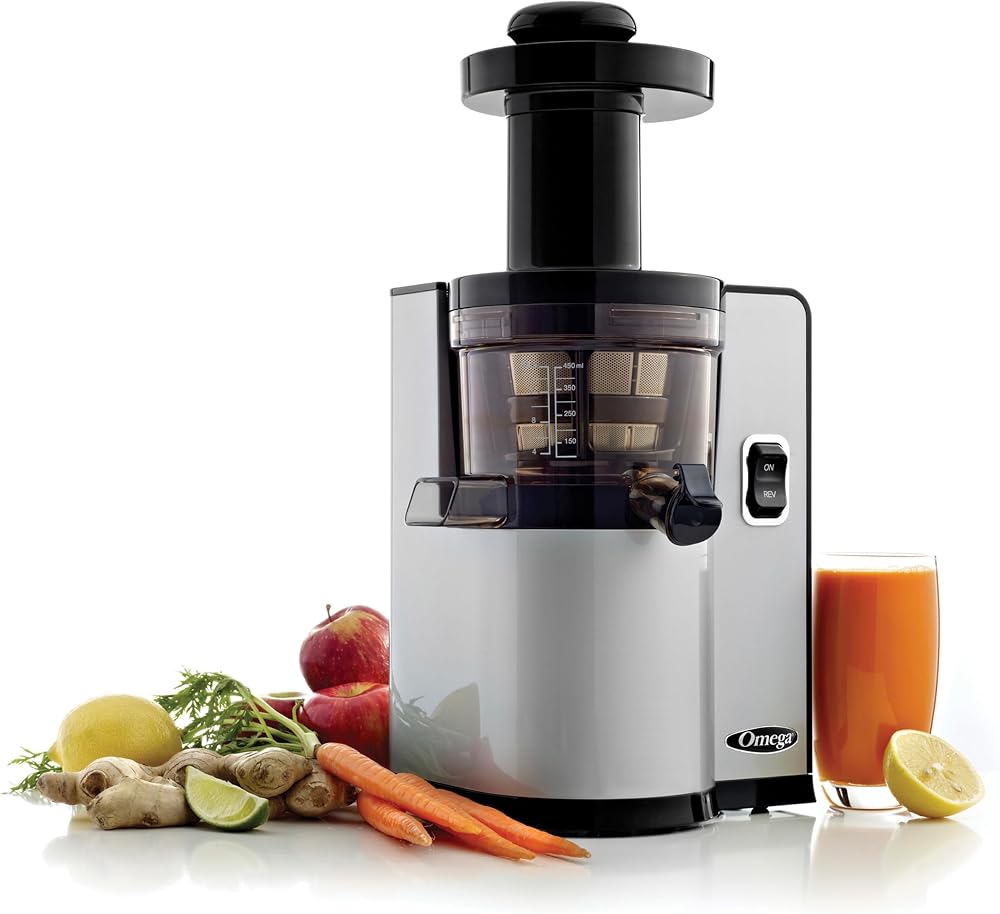
Omega is the name that comes up most when people search for a masticating juicer, and this vertical model shows why. It turns at just 43 RPM, one of the slowest speeds in this roundup, which keeps heat buildup low and slows oxidation so juice holds up better in the fridge.
A dual-edge auger with a tight fit tolerance squeezes more juice and breaks fiber down to a smoother texture. The no-drip tap is the feature owners love: close it during juicing to blend ingredients or make nut milk, then close it again so you can pull the cup away without dripping on the counter.
An automatic cleaning system keeps the screen clear while you juice, and pulp ejects on its own. It carries a 4.3-star average from nearly 2,000 Amazon ratings.
- Very slow 43 RPM for low heat
- No-drip tap for mixing and nut milk
- Auto screen cleaning during juicing
- Large base of owner reviews
- Premium price tier
- Vertical design needs more chopping than wide-chute models
Check Price on Amazon
2. nutribullet Slow Juicer — Best Value
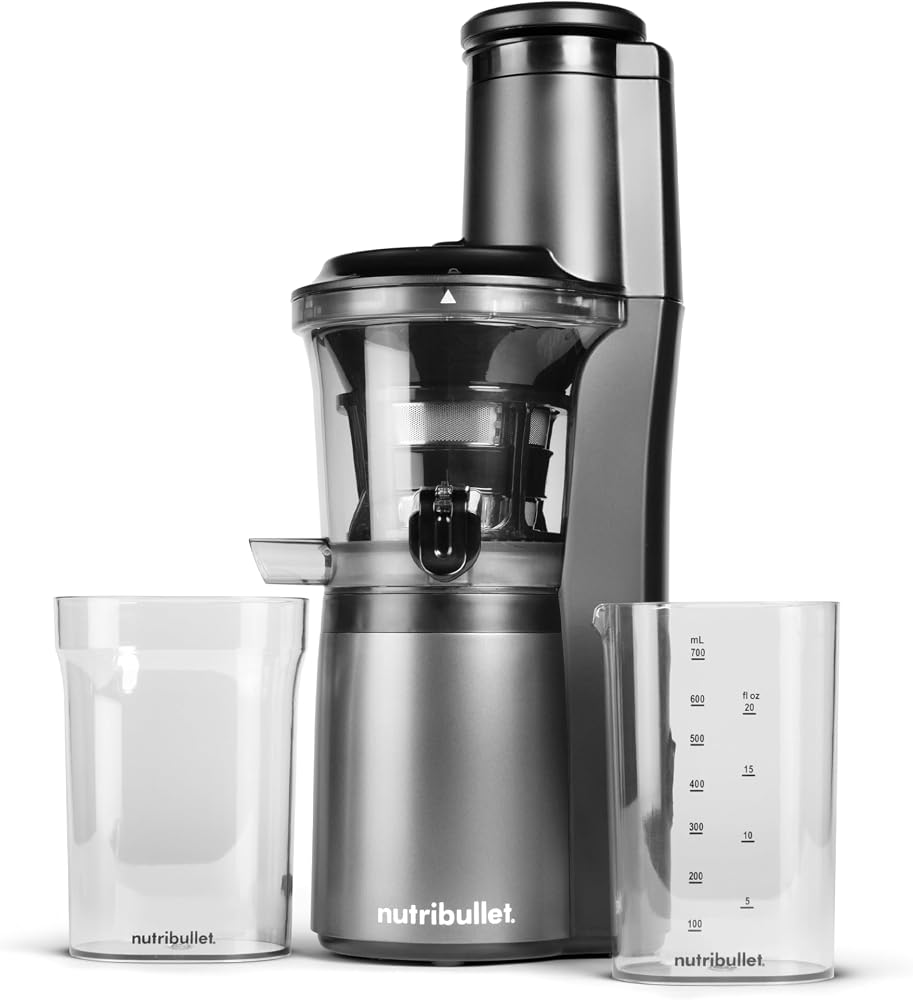
If you want slow-juice quality without the $400 price tag, the nutribullet Slow Juicer is the easiest recommendation. A high-torque, low-speed motor spins at 65 RPM, and a steel-tipped auger presses against a stainless-steel sieve.
The 3-inch feed chute takes larger pieces than most budget slow juicers, so prep is faster. Cleanup is the other win: the parts are dishwasher-safe, and the no-drip spout keeps juice mixing until you are ready to pour.
It is ultra-compact, which matters if your counter is already crowded. With 2,500+ ratings at 4.0 stars, it is one of the most-reviewed models here.
- Affordable for a slow juicer
- Dishwasher-safe parts
- 3-inch feed chute
- Small footprint
- Body is mostly plastic
- Not as specialized for wheatgrass as horizontal models
Check Price on Amazon
3. Tribest Greenstar GS-1000 — Best for Leafy Greens
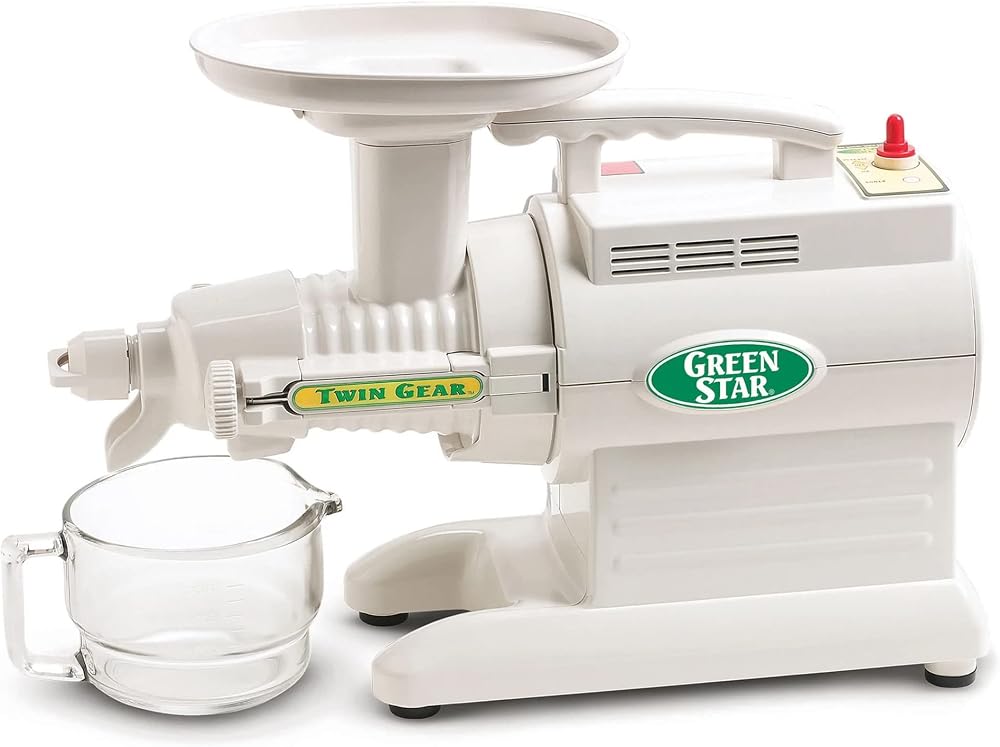
Instead of a single auger, the Greenstar uses twin gears fitted with 24 stainless-steel masticators. This is the design juicing enthusiasts pick for kale, spinach, celery and other stringy greens that tend to wrap around a standard auger.
Pocket recesses and cutting points help it process hard and sinewy vegetables, while a pressure-adjusting mechanism helps prevent jamming. Tribest also builds in magnetic and bioceramic technology in the gears and a nylon safety buffer to keep steel shavings out of your juice.
The box is well stocked: a fine screen, a homogenizing blank (for nut butters and purees), a glass juice pitcher and a cleaning brush.
- Twin-gear press built for greens
- Anti-jam pressure adjustment
- Homogenizing blank for nut butters
- Glass pitcher included
- Horizontal body takes more counter width
- More parts to rinse than a single-auger juicer
Check Price on Amazon
4. Kuvings Whole Slow Juicer B6000W — Best for Whole Fruits
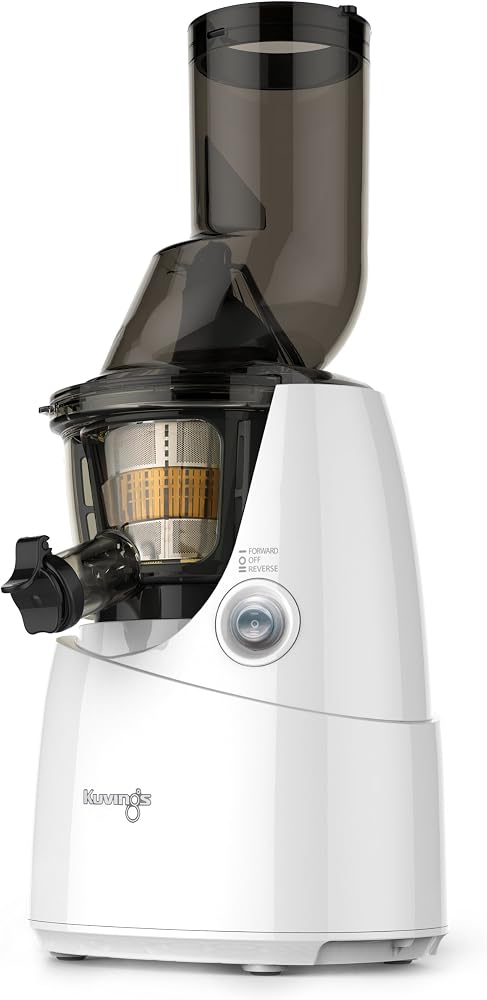
The Kuvings B6000W is built around a wide feeding chute, so you can drop in larger produce with less chopping. That alone saves real time if you juice every morning.
A 240W brushless motor turns at 60 RPM, giving it more power than most slow juicers here while staying quiet and cool. The smart cap lets you mix juice in the chamber and stop drips, and the set includes a sorbet maker and cleaning tools.
It is rated for 110V US/Canada use only. Owner ratings are mixed (3.9 stars), so it suits buyers who value the wide chute and extras most.
- Wide chute means less prep
- 240W brushless motor at 60 RPM
- Sorbet maker and cleaning tools included
- Smart cap for mixing
- Highest price in this list
- Mixed owner ratings
- 110V only
Check Price on Amazon
5. Omega Cold Press 365 H3000R — Best for Wheatgrass
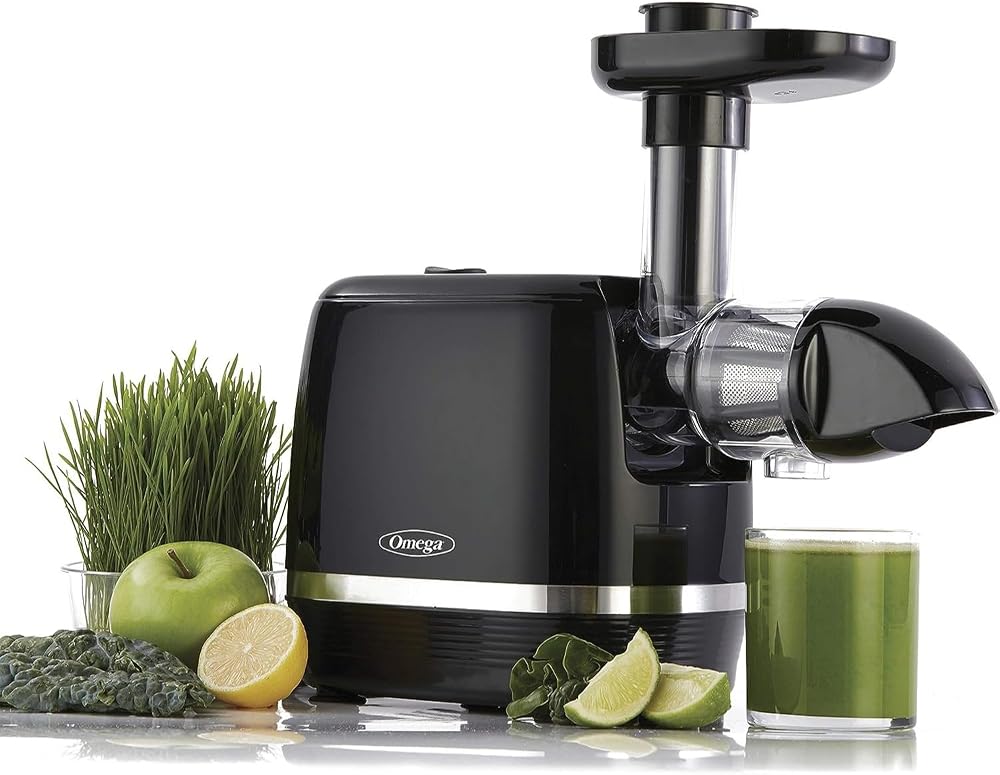
The H3000R is Omega’s compact, everyday option. Its 150W motor runs at 90–110 RPM, and Omega lists celery, carrots, leafy greens and wheatgrass among the produce it handles well.
It is quieter than high-speed juicers and blenders, so an early-morning glass will not wake the house. The slim body is easy to leave out on the counter.
It has a smaller ratings base (4.1 stars from about 150 reviews), but it is a good pick if wheatgrass shots are part of your routine.
- Handles wheatgrass and leafy greens
- Quiet operation
- Compact, counter-friendly design
- Faster RPM than the other slow juicers here
- Fewer owner reviews
Check Price on Amazon
What Is a Masticating Juicer?
“Masticate” means to chew, and that is basically what this machine does. A slow-rotating, screw-shaped auger (or a pair of gears) crushes produce and presses it against a fine screen. Most models run between roughly 40 and 110 RPM, compared with thousands of RPM for a centrifugal juicer.
Because it moves slowly, there is very little friction or heat. That means less foam, less separation and juice that keeps a bit longer in the fridge.
Masticating Juicer vs Centrifugal Juicer
A centrifugal juicer spins a flat blade basket at high speed and flings juice through a mesh. It is fast and usually cheaper, but loud, and it struggles with leafy greens.
- Yield: Masticating models squeeze more juice from greens, herbs and wheatgrass.
- Noise: Slow juicers are much quieter.
- Speed: Centrifugal juicers win if you mainly juice apples and carrots and want a glass in a minute.
- Cost: Centrifugal juicers usually cost less up front.
If greens matter to you, a slow juicer pays for itself in less wasted produce.
Masticating vs Cold Press Juicer: Are They the Same?
For home appliances, yes. “Cold press,” “slow juicer” and “masticating juicer” all describe the same low-speed pressing method. Brands simply use different labels. If you want more options marketed as cold press, see our guide to the best cold press juicers, which covers different models from this list.
Commercial “cold-pressed” juice is a little different: juice bars often use a hydraulic press that squeezes ground produce in a bag.
Horizontal vs Vertical Masticating Juicers
Vertical models, like the Omega 43 RPM and Kuvings B6000W, stand upright, take less counter width and often feed themselves, so prep and juicing go faster.
Horizontal models, like the twin-gear Tribest Greenstar, lie flat. They shine with leafy greens and wheatgrass, and many can double as food processors for nut butters, but they need more counter space and more cleanup.
How to Choose the Best Masticating Juicer
- What you juice most: Greens and wheatgrass favor twin-gear or horizontal designs; mixed fruit favors vertical, wide-chute models.
- Feed chute size: A wider chute means less chopping before every batch.
- Cleanup: Look for dishwasher-safe parts, an included brush or a self-cleaning screen.
- Speed and motor: Lower RPM means less heat; more torque helps with fibrous produce.
- Extras: Homogenizing blanks and sorbet attachments add versatility if you will use them.
How to Use and Clean a Masticating Juicer
- Wash produce under running water and scrub firm items like cucumbers, as the FDA’s juice safety guidance recommends.
- Cut produce to fit the chute and remove hard pits.
- Alternate soft and fibrous items, and roll leafy greens into bundles so they feed evenly.
- Feed slowly and let the auger do the work. Do not force produce down.
- Rinse the screen and auger right after juicing, before pulp dries. Use the included brush on the screen.
Want smoothies with the fiber left in? A blender is the better tool. See our picks for the best KitchenAid blenders.
Common Mistakes to Avoid
- Pushing produce in too fast, which causes clogging.
- Juicing very soft fruit like bananas alone, which turns to puree.
- Letting pulp dry on the screen, which makes cleanup much harder.
It is a slow juicer that uses an auger or twin gears to crush and press produce instead of spinning it with a fast blade. “Masticate” means to chew.
They are better if you want higher yield from leafy greens, less foam and quieter operation. A centrifugal juicer is better if speed and low cost matter most.
For home juicers, yes. Both terms describe low-speed pressing; brands just use different names.
Omega, Tribest, Kuvings, Hurom, Nama and nutribullet are among the most recognized brands for slow juicers.
Many can. Twin-gear and horizontal models such as the Tribest Greenstar are the strongest choices, and Omega lists wheatgrass for the H3000R.
The Bottom Line
For most kitchens, the Omega Vertical 43 RPM is the best masticating juicer: very slow, quiet and easy to keep clean. On a tighter budget, the nutribullet Slow Juicer delivers slow-juice quality at a lower price. If green juice is your daily habit, the twin-gear Tribest Greenstar is worth the extra counter space.
Check Omega Price on Amazon