By Teresa Caruso · Updated September 23, 2026
A French press coffee machine is the simplest way to make a rich, full-bodied cup at home: no pods, no paper filters, no electricity. You add coarse grounds, pour hot water, wait four minutes, and press.
The hard part is choosing the right French press coffee machine. The difference between a $20 press and a $40 press comes down to filtration, materials, and how much sludge ends up in your cup.
We narrowed the field to five French presses that cover every common need: less grit, classic design, tight budgets, easy cleanup, and unbreakable stainless steel.
How We Researched
We compared 20+ French presses on Amazon and the brands’ own spec sheets, then cross-checked them against expert roundups (Serious Eats, America’s Test Kitchen, Food Network) and thousands of verified owner reviews. We scored each one on filtration, build material, capacity, heat retention, and ease of cleaning. Prices and ratings were checked on Amazon in September 2026 and may change.
The 5 Best French Press Coffee Machine Picks for 2026
1. ESPRO P3 French Press 32oz: Best Overall
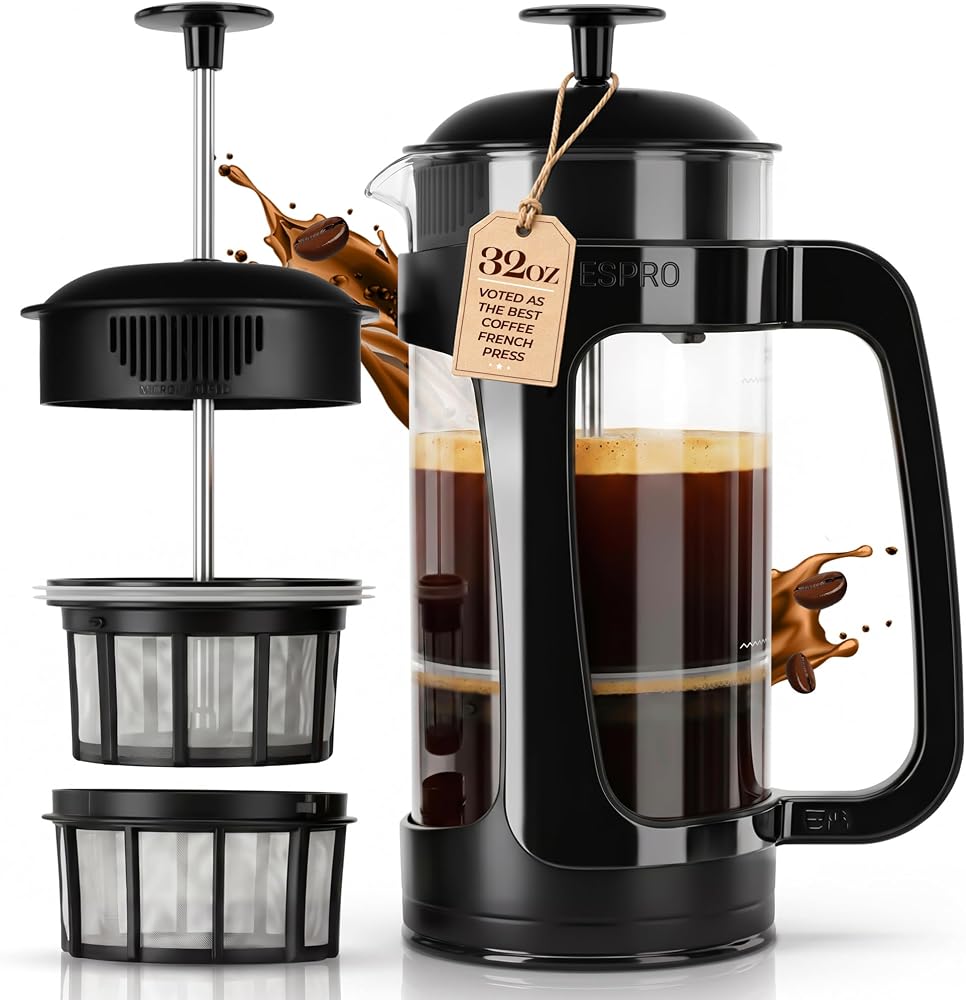
The biggest complaint about any French press is grit at the bottom of the cup. The ESPRO P3 fixes that better than anything else at this price. Instead of a single mesh screen, it uses a patented dual-layer micro-filter that ESPRO says is 12x finer than a standard press filter, so most of the fine sediment stays behind while the coffee’s natural oils still come through.
It brews up to 32 oz (about 4 mugs), and the borosilicate carafe is 40% thicker than typical glass presses, which helps with both durability and heat. A twist-lock latch holds the glass firmly in the frame. ESPRO also includes 10 paper filters that fit the plunger, so you can switch to an ultra-clean, pour-over style cup whenever you want. It works for cold brew too.
At 4.2 stars from 2,300+ Amazon reviews, it rates a little lower than the Bodum classics, mostly because of the plastic frame. But if you want the cleanest cup from any French press coffee machine in this price range, it’s the one we’d buy.
- Dual micro-filter leaves far less sediment
- 10 paper filters included for an even cleaner cup
- 40% thicker borosilicate glass
- Works for hot coffee and cold brew
- Plastic frame feels less premium than stainless
- Double filter takes a bit more effort to press
- Glass carafe is still breakable
2. Bodum Chambord 34oz: Best Classic French Press
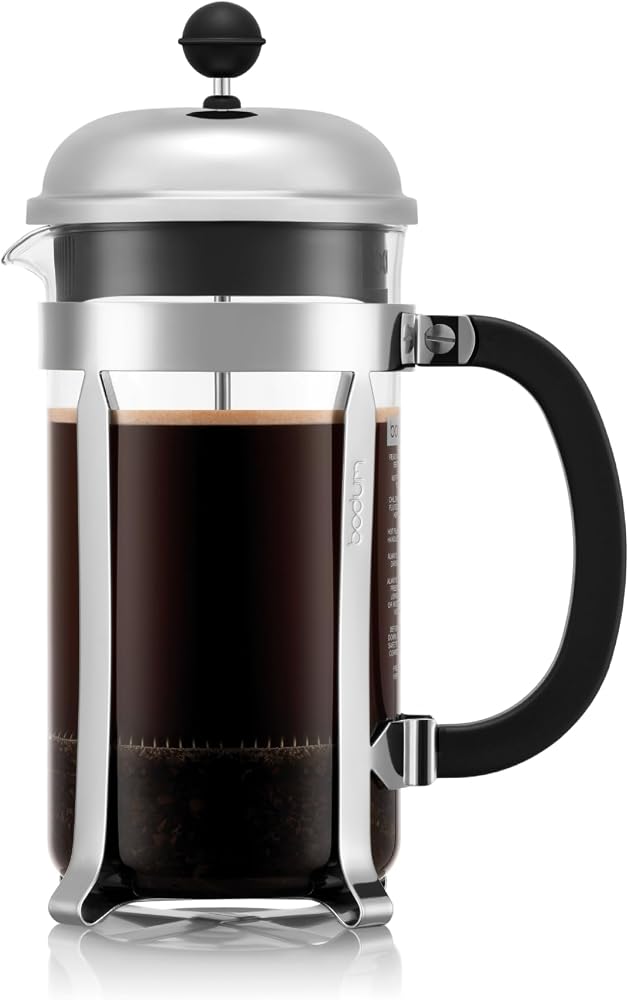
The Chambord is the French press most people picture: a glass carafe held in a polished steel frame with a domed lid. The design dates back decades, and it still has one of the strongest track records on Amazon, with 4.6 stars from nearly 29,000 reviews.
The 34 oz (1 liter) carafe is non-staining, heat-resistant borosilicate glass that won’t hold on to old coffee flavors. The frame and lid are stainless steel with a multi-layer chrome finish, and it’s made in Portugal. The filter is Bodum’s standard stainless mesh, so expect a little more sediment than with the ESPRO.
- Timeless look that suits any counter
- Durable chrome-plated stainless steel frame
- Large 34 oz capacity (about 8 small cups)
- Huge review base: 4.6 stars from ~29K ratings
- Single mesh screen lets more fines through
- Glass carafe is breakable
- No insulation, so coffee cools faster
3. Bodum Brazil 34oz: Best Budget French Press
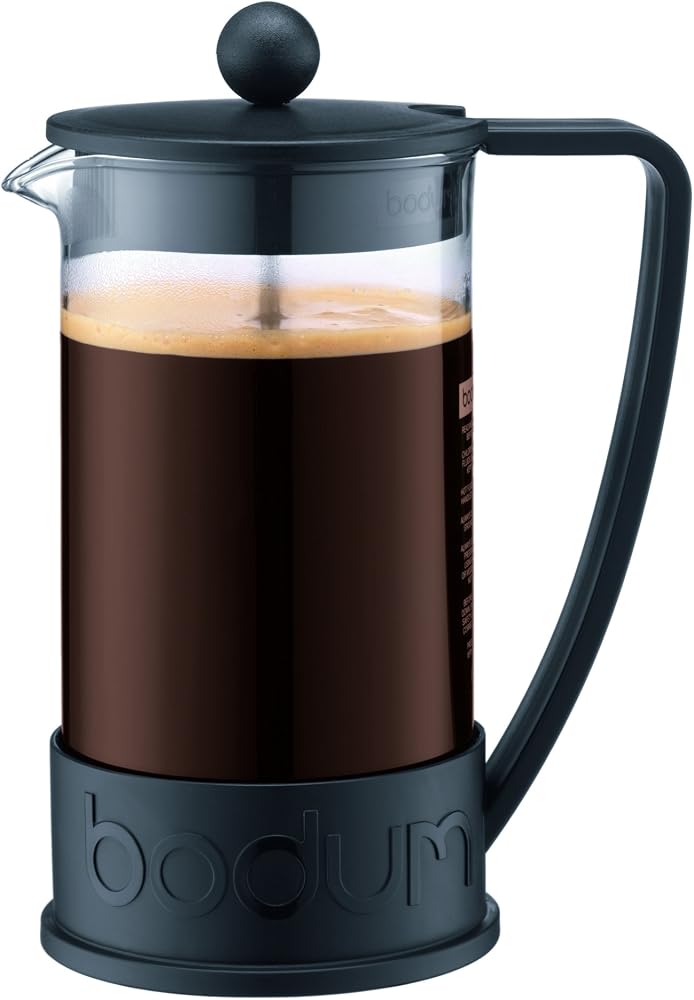
If you just want to try a French press without spending much, the Bodum Brazil is the easy choice at around $20. It uses the same 34 oz borosilicate glass carafe and stainless steel plunger and filter as the Chambord. What changes is the frame, handle, and lid, which are lightweight BPA-free plastic.
The coffee it makes is essentially the same as the Chambord’s. You give up the premium steel frame, not brewing quality. With 4.4 stars from 17,000+ reviews, it’s one of the best-proven budget presses you can buy.
- Around $20 for a full 34 oz press
- Same glass carafe and steel filter as the Chambord
- Lightweight and easy to handle
- No paper filters or capsules needed
- Plastic frame looks and feels cheaper
- Standard mesh filter means some sediment
- No heat retention
4. OXO Brew Stainless Steel French Press 32oz: Best for Easy Cleanup
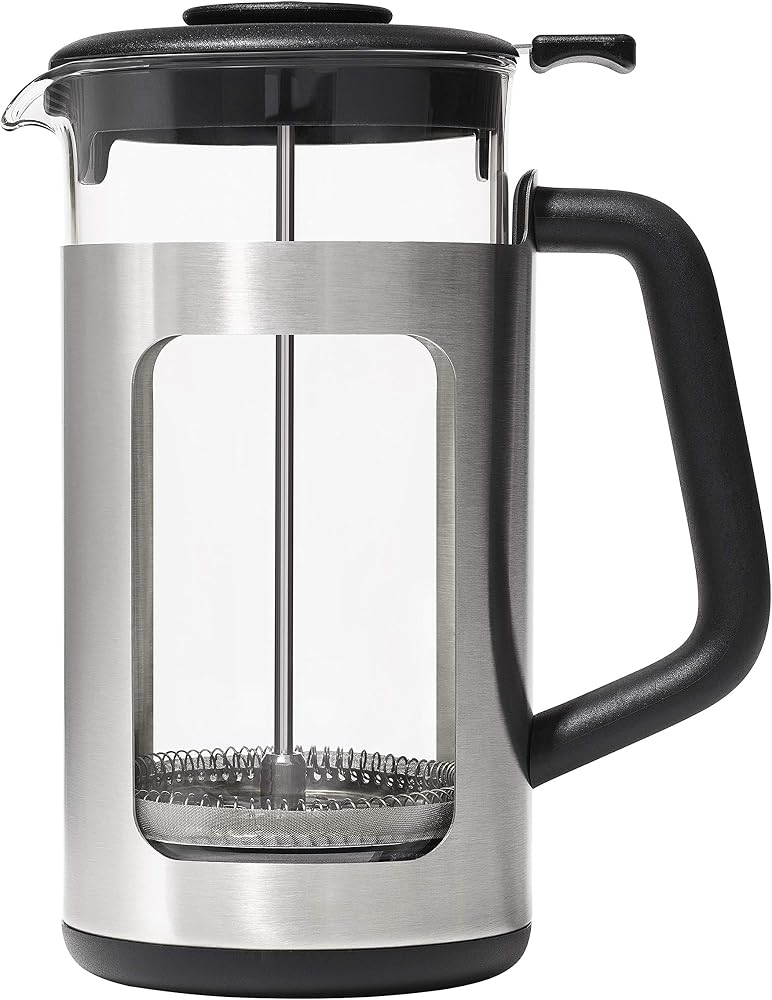
Scooping wet grounds out of the bottom of a narrow carafe is the most annoying part of owning a French press. OXO designed this one around that problem. Its GroundsLifter is a removable basket that pulls the spent grounds out in one go, so cleanup takes seconds and there’s far less mess in your sink.
It holds 32 oz, pairs a borosilicate glass carafe with a stainless steel exterior, and has a fine mesh filter plus a soft, non-slip grip. Its Amazon review count is smaller (4.3 stars from about 600 ratings), but it’s the best choice here if cleanup is what keeps you from using a press every day.
- GroundsLifter removes grounds in one motion
- Stainless steel exterior protects the glass
- Comfortable non-slip grip
- Fine mesh filter keeps grounds in the press
- Smaller review base than the Bodum models
- Pricier than the budget option
- Inner carafe is still glass
5. Secura Stainless Steel French Press 34oz: Best Stainless Steel
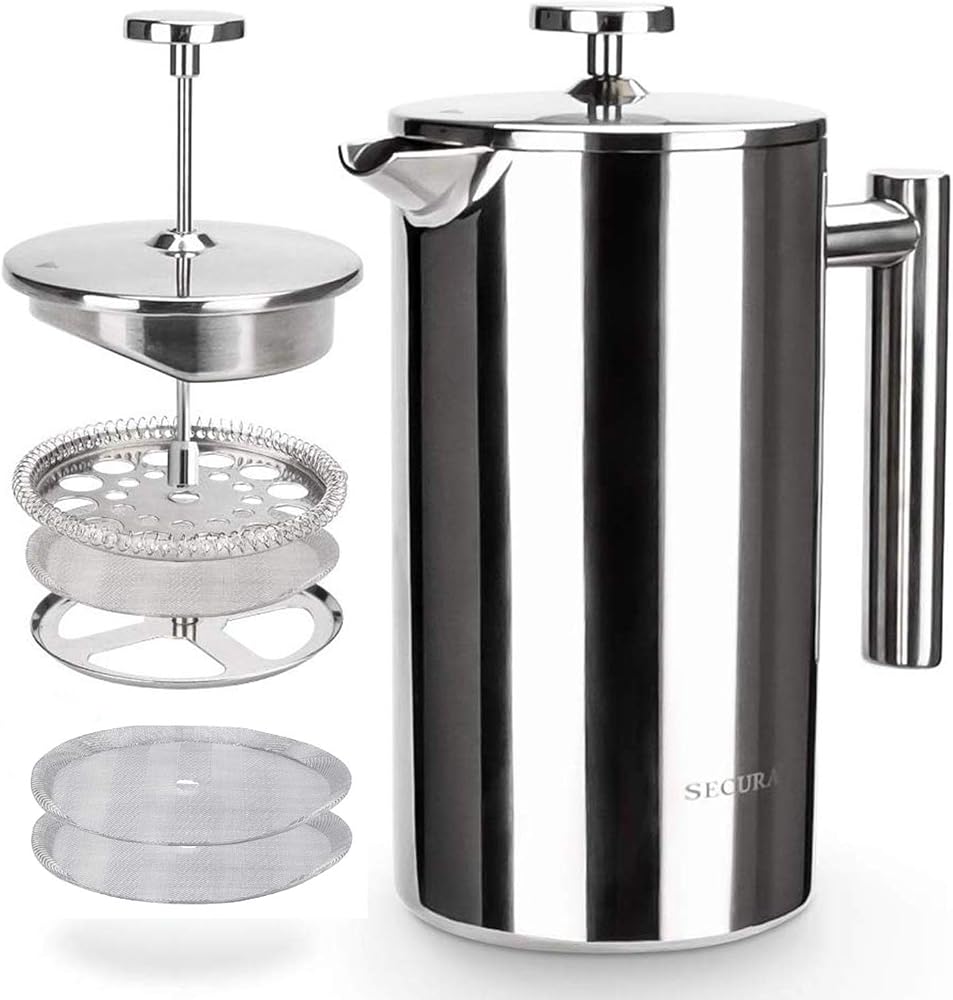
A common piece of advice in coffee forums: buy stainless steel, because sooner or later every glass press breaks. The Secura is the most popular stainless French press coffee machine on Amazon. It’s made entirely of 18/8 (304) stainless steel inside and out, with double-wall insulation that keeps coffee hot far longer than any glass press.
It uses a three-layer stainless filter that traps more fines than a single screen, and it comes with two extra screens. Stacking them tightens the filtration even more. All parts are dishwasher safe, and the handle and knob stay cool to the touch. At 4.7 stars from 36,000+ reviews and under $30, it’s the highest-rated press on this list.
- Unbreakable 18/8 stainless steel
- Double-wall insulation keeps coffee hot
- 3-layer filter plus 2 spare screens
- Dishwasher-safe parts
- 4.7 stars from 36K+ ratings
- You can't see the brew or how much is left
- Heavier than glass presses
- Harder to check the grounds while steeping
How to Use a French Press Coffee Machine (4 Simple Steps)
These steps follow the National Coffee Association’s French press guide, which recommends about 4 minutes of contact time and water around 93°C (about 200°F).
- Add coarse grounds. Use about 1 tablespoon of coarse-ground coffee per 4 oz of water. For a 32–34 oz press, that’s roughly 8 tablespoons (about 55–60 g).
- Pour hot water. Use water just off the boil, 195–205°F. Leave about an inch of space at the top, then give it a gentle stir.
- Steep for 4 minutes. Put the lid on with the plunger pulled all the way up and let it brew.
- Press and pour right away. Push the plunger down slowly and steadily, then pour all the coffee out so it doesn’t keep extracting and turn bitter.
French Press vs Coffee Machine: Which Is Better?
Neither is better for everyone. It depends on the cup you like. A French press uses full immersion and a metal filter, so it lets the coffee’s natural oils and some fine particles through. You get a heavier, richer, more full-bodied cup. A drip coffee machine uses a paper filter that traps those oils, so the cup is cleaner, lighter, and crisper.
| French Press | Drip Coffee Machine | Keurig / Pod Machine | |
|---|---|---|---|
| Flavor | Rich, bold, full-bodied | Clean, smooth | Consistent, lighter |
| Brew time | ~4–5 minutes, hands-on | ~5–10 minutes, hands-off | ~1 minute |
| Ongoing cost | Beans only | Beans + paper filters | Pods (highest per cup) |
| Waste | No filters or pods | Paper filters | Plastic/aluminum pods |
| Power needed | No | Yes | Yes |
If you want convenience and a big batch on a timer, a drip machine wins. If you want the most flavor per dollar with zero electricity or waste, a French press coffee machine is the better buy. And if you want espresso-style drinks instead, see our guide to the best budget espresso machines.
Pros and Cons of a French Press
Why people love it: it preserves natural coffee oils for a creamier mouthfeel, extracts flavor evenly because the grounds steep the whole time, creates no paper or pod waste, and is simple, portable, and forgiving. It also doubles as a cold brew and tea maker.
The downsides: some sediment in the cup (less with a double filter like the ESPRO), a slower, hands-on brew, messier cleanup (unless you pick the OXO), and bitter coffee if you leave it sitting on the grounds after pressing.
What to Look for in a French Press Coffee Machine
Glass vs Stainless Steel vs Ceramic
Glass (borosilicate) lets you watch the brew and doesn’t hold flavors, but it breaks and loses heat quickly. Stainless steel is nearly indestructible, and double-wall models keep coffee hot much longer, but you can’t see inside. Ceramic/stoneware holds heat well and looks great on the table, but it’s heavy, more expensive, and can chip.
Filtration
A single mesh screen is standard. Multi-layer or double micro-filters (ESPRO, Secura) cut sediment noticeably. If grit bothers you, this matters more than anything else.
Capacity
Most full-size presses hold 32–34 oz, enough for 2–3 mugs. Solo drinkers may prefer a 12–17 oz model. Always check whether “cups” means 4 oz cups, which is how most brands count.
Ease of cleaning
Look for a plunger that comes apart easily, dishwasher-safe parts, and a wide opening. Features like OXO’s GroundsLifter save real time every day. For more small tools that earn their counter space, check out our best kitchen gadgets roundup.
Common French Press Mistakes (and Why Your Coffee Tastes Bad)
- Grinding too fine: fine grounds slip through the filter and over-extract, which makes the coffee muddy and bitter. Use a coarse grind, about the size of sea salt.
- Water that’s too hot or too cold: boiling water can scorch the coffee, and water that’s too cool leaves it sour. Aim for 195–205°F.
- Steeping too long: go past about 4–5 minutes and bitterness creeps in.
- Leaving coffee in the press: it keeps extracting on the grounds. Pour it all into a mug or carafe right after pressing.
- Pressing too hard or fast: this forces fines through the mesh. Press slowly and steadily.
- Skipping cleaning: old oils go rancid and spoil the next brew. Rinse and disassemble the filter regularly.
You can, but it isn’t ideal. Regular pre-ground coffee is usually a medium grind made for drip machines, so more particles pass through the mesh and the cup can taste muddy and bitter. For the best results, use a coarse grind. Many bags are labeled “coarse” or “for French press,” or you can grind whole beans at home.
Steep for about 4 minutes before pressing, then pour all the coffee out right away. If you leave brewed coffee sitting on the grounds, it keeps extracting and turns bitter within minutes.
Medium to dark roasts ground coarsely work especially well, because full-immersion brewing brings out their deep, chocolatey, full-bodied notes. Freshly ground whole beans will always taste better than pre-ground coffee.
Drip coffee has an edge for people watching cholesterol. French press coffee isn’t filtered through paper, so it keeps more cafestol and kahweol, natural coffee oils that can raise LDL cholesterol when consumed in large amounts. If that’s a concern, use a paper-filter insert such as the ones included with the ESPRO P3, or ask your doctor.
For most coffee drinkers, yes. A good French press costs $20–$40, lasts for years, needs no filters, pods, or electricity, and makes a richer cup than most drip machines. It’s worth it if you don’t mind a hands-on, four-minute brew.
The Bottom Line
For most people, the ESPRO P3 is the best French press coffee machine: its dual micro-filter delivers a noticeably cleaner cup for around $40. If you want the iconic look, get the Bodum Chambord. On a budget, the Bodum Brazil brews the same coffee for about $20. Choose the OXO if you hate cleanup, or the Secura if you want an unbreakable, insulated press that keeps coffee hot.
See Our Top Pick on Amazon